
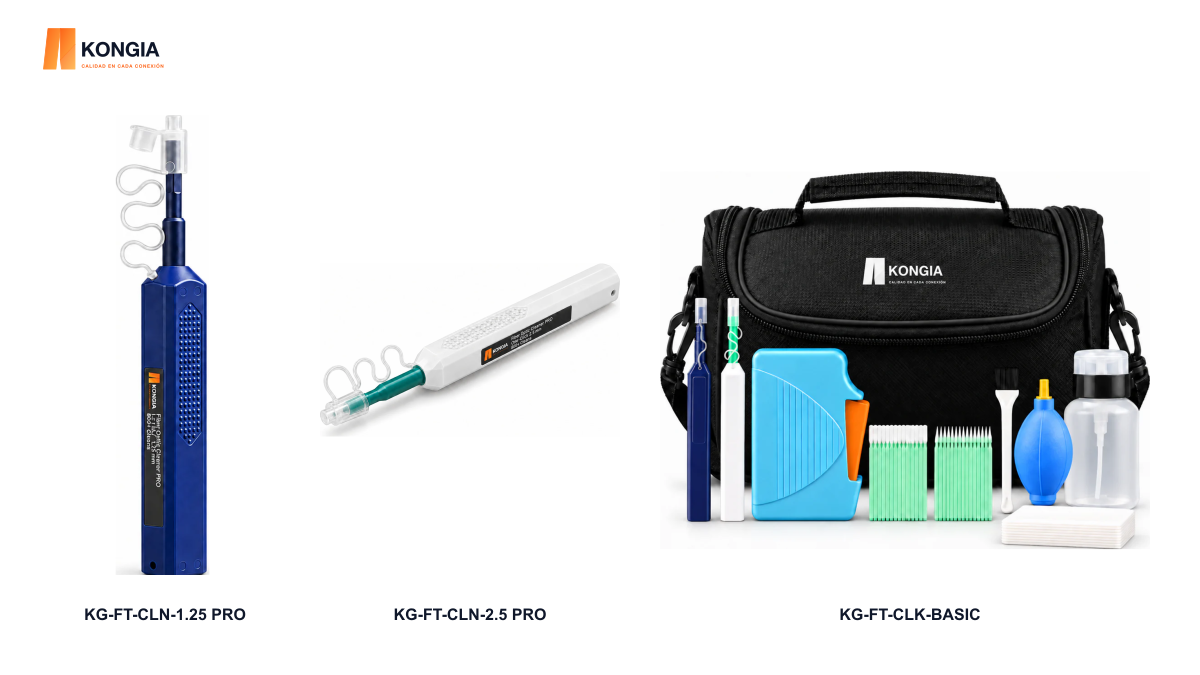
Quick answer. Identify the connector, ferrule size and access before choosing a cleaning tool. The selected KONGIA PRO pen uses 1.25 mm for LC/MU or 2.5 mm for SC/FC/ST. Inspect the end-face, clean when required and inspect again. A click or nominal operation count is not an acceptance result.
1. Identify the end-face and make inspection safe
Record whether you are working on a patch-cord connector or inside a compatible adapter port. Confirm connector format, ferrule size, polish and tool access rather than choosing only by body color. An unsuitable tip can make the intended cleaning action impossible.
Never look into an active fiber. The KONGIA KG-FT-IK-400X optical microscope is listed only for disconnected fiber without optical emission. Follow the isolation and inspection procedure for the actual equipment; do not treat the included microscope as a live-fiber viewer.
2. Match the two PRO pens to their stated interfaces
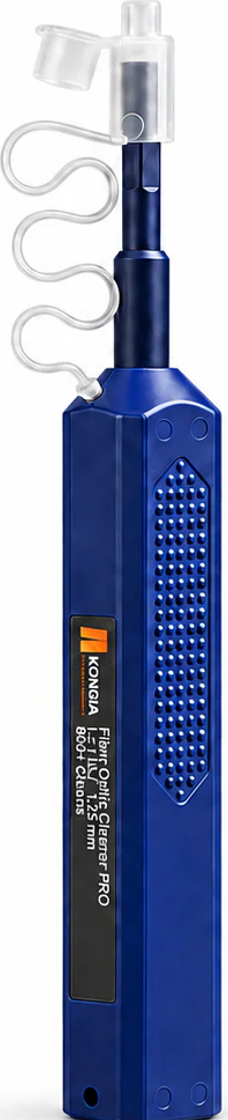
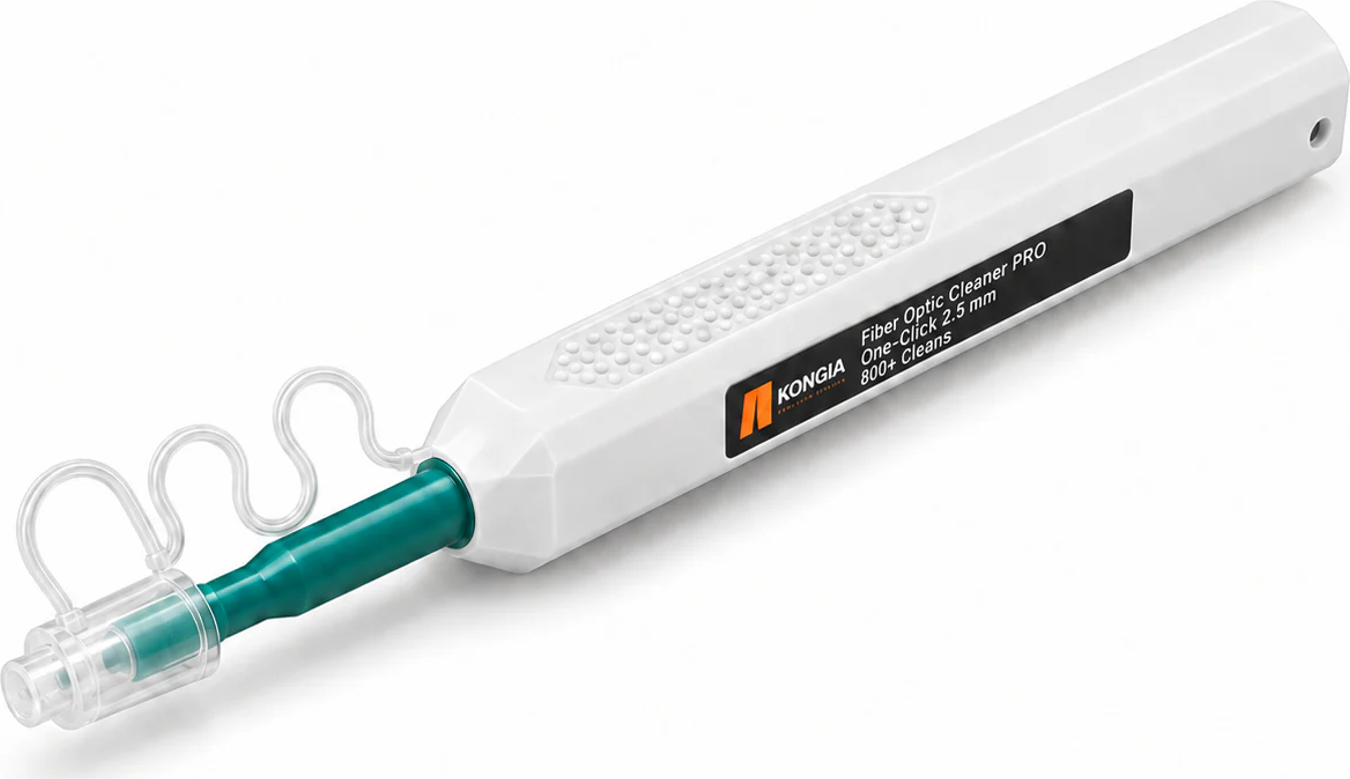
KG-FT-CLN-1.25 PRO lists a 1.25 mm tip for LC/MU. KG-FT-CLN-2.5 PRO lists 2.5 mm for SC/FC/ST. Both use internal dry cleaning tape and manual pressure actuation; the sales unit is one pen. They are separate references, not a promise that one tip fits every connector.
Their nominal capacity is more than 800 cleaning operations per unit. An operation is not a verified clean connector, and repeated cleaning can consume more than one operation. Confirm access and the exact tip before using either reference.
| Check | 1.25 mm PRO pen | 2.5 mm PRO pen |
|---|---|---|
| Exact reference | KG-FT-CLN-1.25 PRO | KG-FT-CLN-2.5 PRO |
| Stated interfaces | LC / MU | SC / FC / ST |
| Cleaning method | Dry internal tape | Dry internal tape |
| Sales unit | One pen | One pen |
| Nominal operations | More than 800 per unit | More than 800 per unit |
| Still to confirm | Actual connector access and inspection result | Actual connector access and inspection result |

3. Know what the kit actually contains
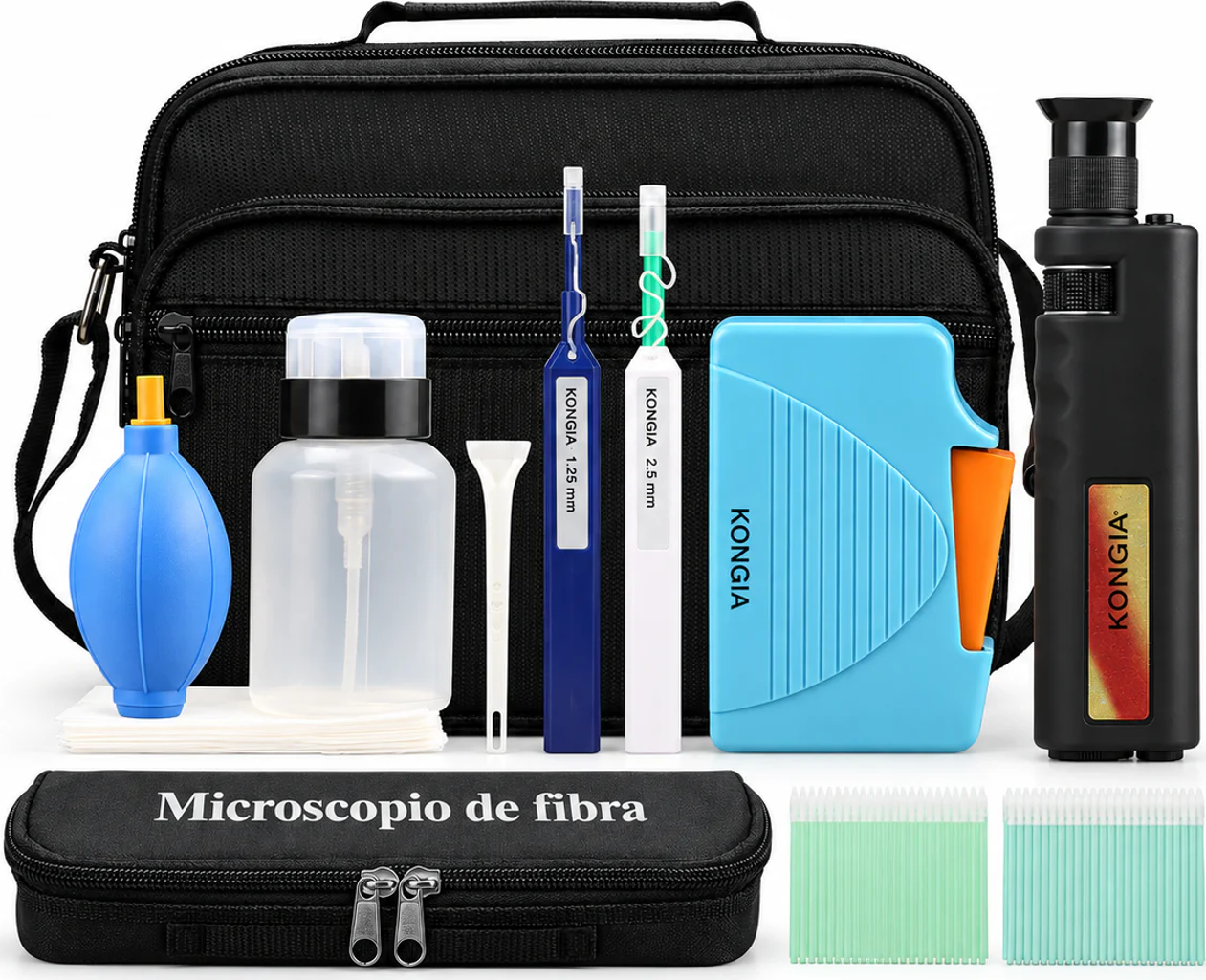
KG-FT-CLK-BASIC lists both 1.25 mm and 2.5 mm pens, a dry cassette with replaceable core, 50 lint-free wipes, 100 swabs of each size and an empty bottle. Alcohol is not included. The cassette’s stated capacity is more than 550 operations; do not substitute the pens’ count for it.
KG-FT-IK-400X adds a manually focused 400X optical inspection microscope with 1.25 mm and 2.5 mm interfaces. The listed kit includes cleaning accessories and an empty bottle; cleaning liquid is not included. A magnification number does not establish automatic grading, image storage or standards-based certification.
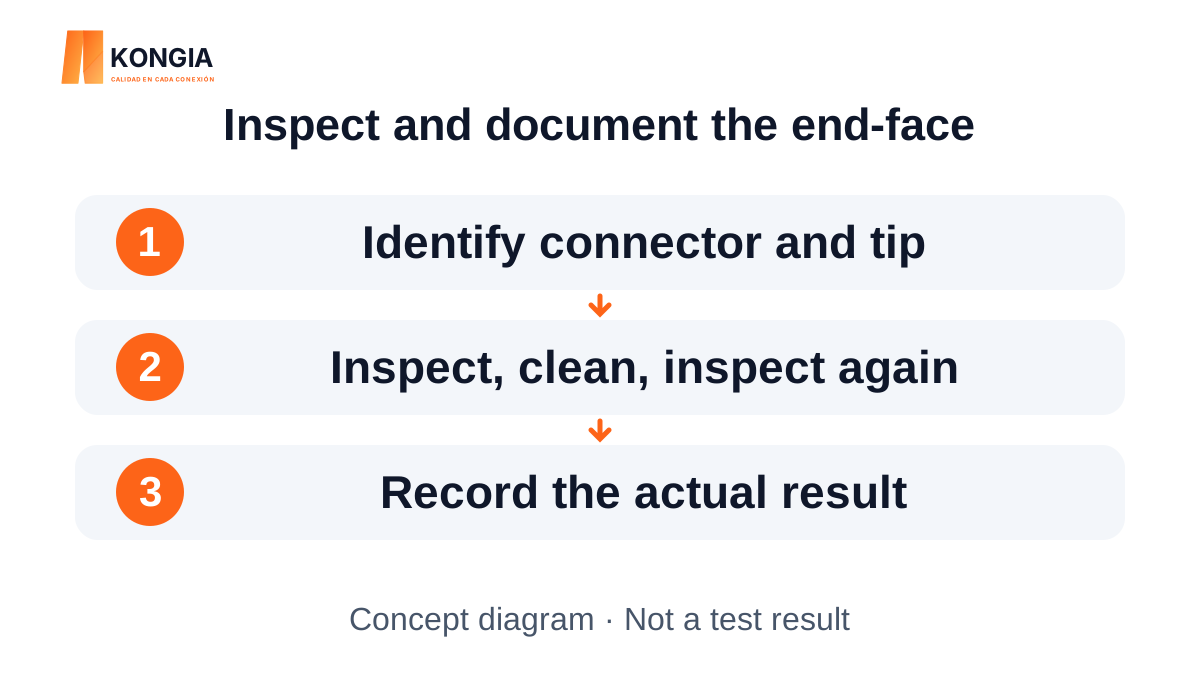
4. Inspect, clean when needed, then inspect again
Fluke’s inspection guidance supports checking the end-face before connection and after cleaning. Use the method and consumable approved for the connector and contamination involved. These dry-pen references are not instructions to add alcohol to the pen.
Keep contact surfaces and replacement consumables protected from contamination. If the face remains unacceptable or appears damaged, stop and follow the agreed escalation procedure instead of repeating clicks until assuming success. An end-face inspection and an optical-loss test answer different questions.
5. Keep an honest acceptance record
Create a record with link or port ID, connector format, tool reference, inspection instrument, date, operator and the before/after observation. Save images only if the actual inspection equipment provides that function; do not promise it for the 400X optical microscope.
Record the agreed criterion and actual outcome, including unresolved damage or contamination. If the project requires a stated standard or independent performance test, specify the instrument and report needed separately. Do not label a clean-looking face as a certified whole link.
6. Prepare the maintenance-stock request
Separate initial kits from replenishment needs. State connector families, access requirements, expected work and the exact consumable sizes. Confirm replacement compatibility and commercial terms rather than assuming a universal refill.
- Identify LC/MU versus SC/FC/ST and the actual access.
- Confirm safe inspection equipment for the work.
- Distinguish pen capacity from cassette capacity.
- Check wipes, swabs and whether any liquid is included.
- Agree inspection records and the escalation path.
Related KONGIA products
Questions before ordering
Will a 2.5 mm pen replace a 1.25 mm pen for LC?
No. The selected 1.25 mm PRO reference lists LC/MU; the 2.5 mm reference lists SC/FC/ST. Check the exact connector and access.
Does 800+ operations mean 800 accepted connectors?
No. It is a nominal operation count, not an inspection result. One connector may require multiple actions or further investigation.
Do these kits contain alcohol or cleaning liquid?
The specified bottles are empty. Alcohol is not included with KG-FT-CLK-BASIC, and cleaning liquid is not included with KG-FT-IK-400X.
Can the included 400X microscope inspect live fiber?
No. Its stated use is disconnected fiber without optical emission. Follow the appropriate isolation and inspection procedure.
The KONGIA approach
KONGIA aims to turn maintenance choices into clear, explainable decisions for distribution and installation partners. Matching a consumable to the connector and keeping honest inspection records support that purpose. We seek simpler selection, sourcing and use while respecting channel investment and the cooperation terms agreed in writing.
Our purpose and values →Sources and scope
Maintenance planning, not a universal cleaning instruction, safety certification or completed inspection report. Use the actual connector and instrument instructions. The source guidance does not certify KONGIA products or any installed link.
- KONGIA — KG-FT-CLN-1.25 PRO
- KONGIA — KG-FT-CLN-2.5 PRO
- KONGIA — KG-FT-CLK-BASIC
- KONGIA — KG-FT-IK-400X
- Fluke Networks — Inspect, clean and inspect again
Prepared with AI assistance and the listed references. All diagrams are conceptual. No new cleaning test, customer installation or pass result is claimed. The product images use approved KONGIA catalog originals; separate technical diagrams remain explanatory. Editorial policy