
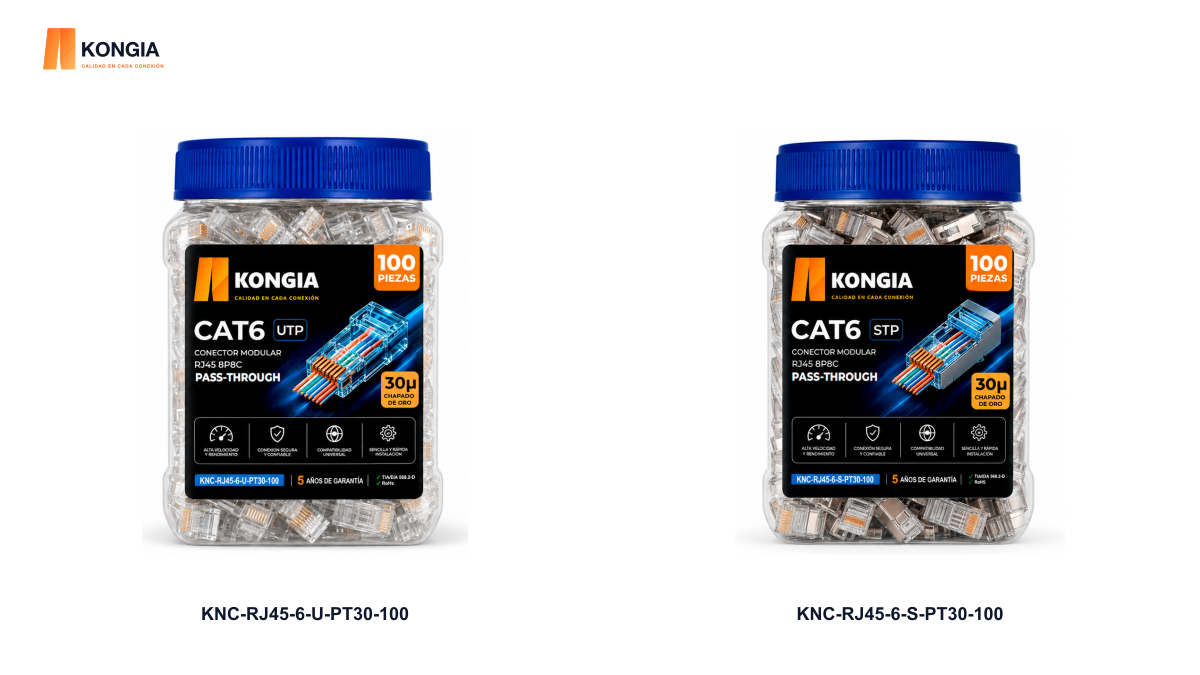
Quick answer. Match the exact cable to the plug before starting a batch. Conductor gauge, solid or stranded construction, insulation diameter, jacket fit and the termination tool are separate checks. The two KONGIA Cat6 references below list 23–26 AWG and 0.95–1.15 mm conductor insulation; that range is not a cable-jacket diameter or a promise that every Cat6 cable fits.
1. Identify the cable before choosing the plug
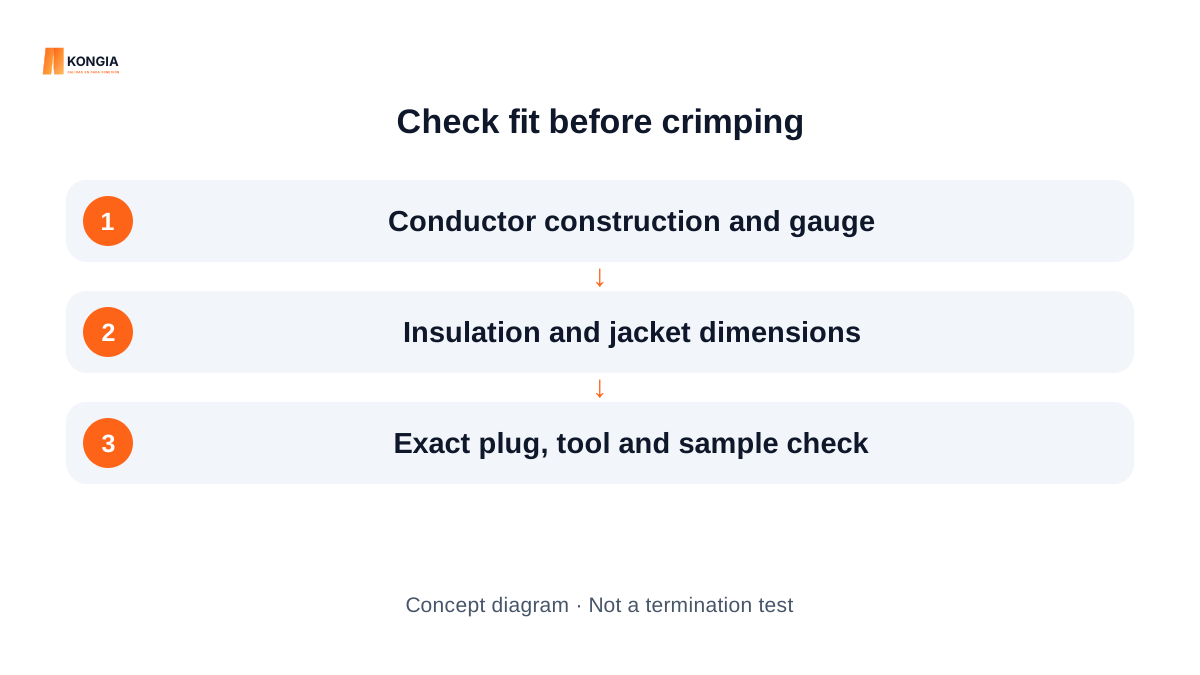
Record the cable manufacturer, exact model and construction from its documentation. Ask separately for conductor gauge, solid or stranded construction, insulated conductor diameter, overall jacket diameter and shielding. A category name or a cable photograph does not provide all of those fields.
METZ CONNECT’s published field-plug data sheet separates bare-conductor dimensions, insulated-core diameter and cable-sheath diameter. That illustrates the different measurements; its product limits do not apply to the KONGIA plugs in this guide.
2. Compare these exact Cat6 pass-through references
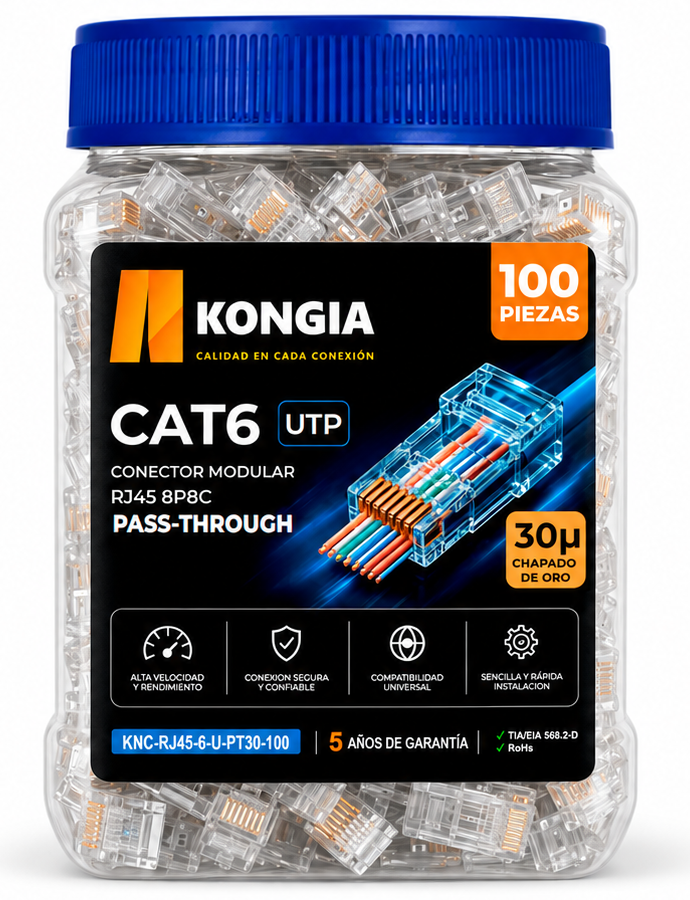
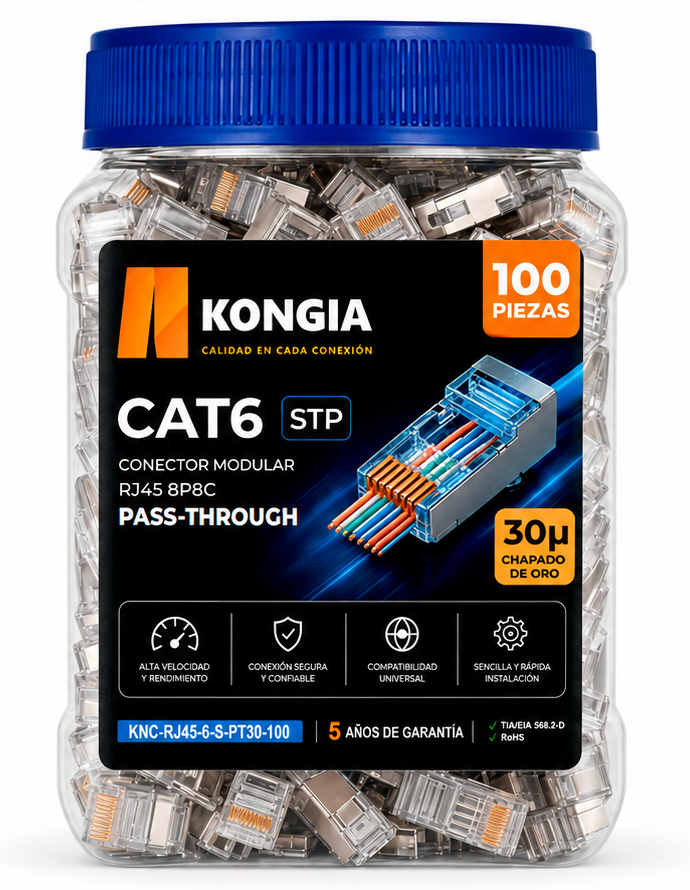
KNC-RJ45-6-U-PT30-100 is the unshielded UTP reference; KNC-RJ45-6-S-PT30-100 is the shielded STP reference. Their current records each list a 23–26 AWG conductor range and 0.95–1.15 mm compatible conductor insulation. The records describe contacts for solid and stranded cable. Confirm the actual cable and plug combination before accepting it.
Both references are sold as a jar of 100 plugs. Keep the exact shielding reference and order unit on the purchase order. Do not turn a pack quantity into an installed-link count, and do not transfer a different plug’s dimensions or approvals to this pair.
| Check | UTP reference | STP reference |
|---|---|---|
| Exact SKU | KNC-RJ45-6-U-PT30-100 | KNC-RJ45-6-S-PT30-100 |
| Cable shielding | Unshielded UTP | Shielded STP |
| Listed conductor gauge | 23–26 AWG | 23–26 AWG |
| Listed conductor insulation | 0.95–1.15 mm | 0.95–1.15 mm |
| Order unit | Jar of 100 plugs | Jar of 100 plugs |
| Still confirm | Actual jacket fit and exact tool | Actual jacket fit, shield arrangement and exact tool |
3. Do not confuse insulation diameter with jacket diameter
The 0.95–1.15 mm field concerns each insulated conductor, not the outside of the complete cable. A conductor may fit its wire passage while the cable jacket, separator, shield or boot still prevents proper assembly. Use the cable drawing and the actual plug geometry.
These cited KONGIA records do not establish a numerical jacket-diameter window. Ask for that information and verify a sample of the actual cable instead of estimating it from the AWG value. Do not remove or alter essential cable or plug parts merely to force a fit.
4. Match the tool and the termination style
A pass-through plug needs the tool and trimming arrangement intended for that plug. Klein Tools names a specific crimper for its own pass-through connector; that manufacturer example does not prove compatibility between a Klein tool and a KONGIA plug. Obtain the correct tool or die confirmation for the actual reference.
Follow the cable, connector and tool instructions for preparation and termination. Work on isolated, unpowered cabling. Shielded and unshielded references also require the appropriate cable and project shielding arrangement; a metal shell alone does not complete the system design.
5. Inspect and test the actual sample
Before committing a large batch, identify a sample by cable model or lot, plug SKU and tool reference. Record whether conductors seat correctly, the jacket is retained as intended and trimming follows the connector instructions. These observations are not a new KONGIA laboratory result.
Fluke explains that a wire map checks conductor connections but does not establish bandwidth performance. Use the project’s agreed inspection and performance acceptance methods, and keep actual results attached to the sample record. Do not label a visually neat plug as a certified channel.
6. Send a cable-specific purchasing brief
Include the cable data sheet, conductor construction and gauge, insulated-core and jacket dimensions, shield type, boot, plug reference and proposed tool. Mark unknown dimensions or compatibility as questions to resolve before order approval.
Retain the accepted cable/plug/tool combination and any later substitution. A replacement cable lot or connector reference should not silently inherit the earlier sample result.
- Identify the exact cable and its conductor construction.
- Keep conductor, insulation and jacket measurements separate.
- Choose the UTP or STP plug reference and pack quantity.
- Confirm the termination tool and test an actual identified sample.
- Record the agreed result and control later substitutions.
Related KONGIA products
Questions before ordering
Does 23 AWG alone prove this cable will fit?
No. Confirm conductor construction, insulation and jacket dimensions, shielding, plug geometry and the exact termination tool.
Is 0.95–1.15 mm the permitted complete cable diameter?
No. In these references it describes compatible conductor insulation. A numerical jacket-fit range is not established by that field.
Can any RJ45 crimper trim a pass-through plug?
Do not assume so. Confirm the exact plug, tool or die and trimming method. Another manufacturer’s recommended tool is not a KONGIA compatibility approval.
Does a passed wire map certify the full Cat6 channel?
No. Use the project’s agreed performance acceptance method and retain its actual report.
The KONGIA approach
KONGIA aims to make connection choices clear enough to explain before an order is placed. Separating verified cable dimensions from unanswered fit questions helps partners buy and install with greater confidence. We seek simpler selection, sourcing and use while respecting channel investment and written cooperation and market-protection terms.
Our purpose and values →Sources and scope
A connector-selection and sample-record checklist, not universal crimping instructions or an independent certification. Numerical ranges apply only to the exact cited KONGIA records and must be confirmed for the supplied cable and plug.
- KONGIA — KNC-RJ45-6-U-PT30-100
- KONGIA — KNC-RJ45-6-S-PT30-100
- METZ CONNECT — Example of separate conductor, insulation and jacket fields (not KONGIA limits)
- Klein Tools — Product-specific pass-through tool recommendation (not KONGIA compatibility)
- Fluke Networks — Wire-map scope and limits
Prepared with AI assistance and the listed product and manufacturer sources. Concept diagrams are not product photographs, customer installations or completed termination tests. The product images use approved KONGIA catalog originals; separate technical diagrams remain explanatory. Editorial policy